Master Universal Design. Design for Everyone.
A practical learning lab for the seven principles of Universal Design, Universal Design for Learning (UDL), and the accessibility knowledge you need for IAAP CPACC certification -- and for real-world inclusive design.
Why Universal Design matters
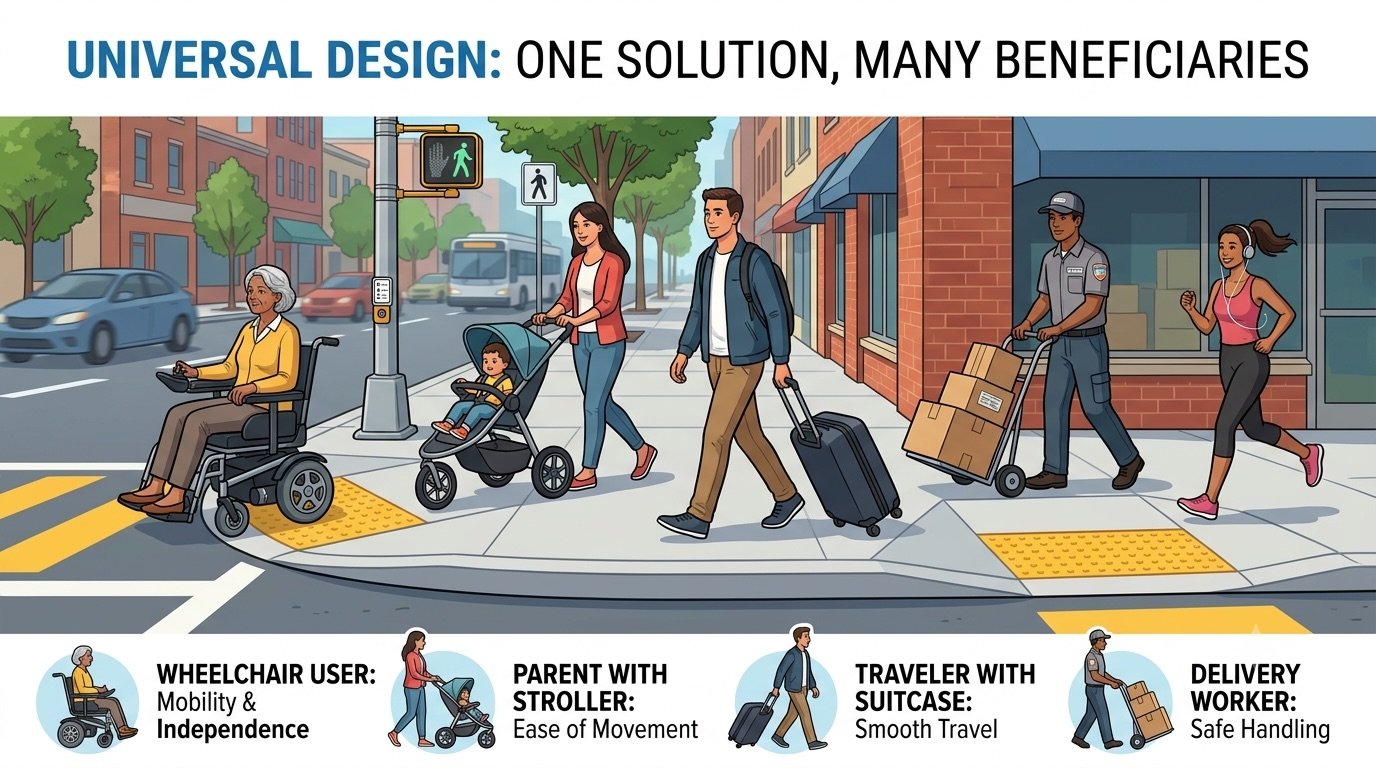
Universal Design (UD) is the design of products, environments, and services to be usable by all people, to the greatest extent possible, without the need for adaptation or specialized design. The term was coined by architect Ronald Mace. The goal is not "special" solutions for some people -- it is better design for everyone from the start.
Your learning path on this site
Content is organized so you can build understanding step by step. Each page uses multiple formats -- text, structured lists, examples, self-checks, and visual summaries -- so you can engage the way that works best for you (a core idea of Universal Design for Learning).
-
7 Principles
Deep dive into Equitable Use through Size and Space, with guidelines and real examples. -
UDL
Multiple means of Engagement, Representation, and Action & Expression (CAST Guidelines 3.0). -
Accessibility Core
Disability models, categories, assistive technology, WCAG overview, accommodations vs UD. -
Resources
Official links, study tips, and practice ideas for IAAP CPACC.
How this site supports different ways of learning
This site itself is built with Universal Design and UDL in mind. You will find:
- Text explanations in clear language with logical heading structure
- Structured guidelines and numbered principles for scanning
- Real-world examples and "what it looks like" boxes
- Self-check questions with expandable answers
- Visual summaries (cards, diagrams, stats)
- Light and dark themes with strong contrast, plus a theme toggle
- Full keyboard access, skip link, and screen-reader-friendly markup
You can also adjust text size in your browser, use a screen reader, or switch to high-contrast system settings. The design aims to stay usable under those conditions.
Connection to IAAP CPACC
The Certified Professional in Accessibility Core Competencies (CPACC) exam from the International Association of Accessibility Professionals (IAAP) tests broad knowledge across three domains:
- Disabilities, Challenges, and Assistive Technologies (about 40%)
- Accessibility and Universal Design (about 40%) -- including the 7 Principles and UDL
- Standards, Laws, and Management Strategies (about 20%)
This site focuses especially on Domain 2 (Universal Design and UDL) while also covering core Domain 1 concepts so you understand why inclusive design is necessary. Official study materials and the Body of Knowledge remain the primary sources for exam preparation; use this site to build intuition and lasting understanding.
Ready to begin?
Start with the seven principles. They are the foundation of Universal Design and appear directly in CPACC content. Or jump to Accessibility Core if you prefer to ground yourself in disability models and barriers first.